
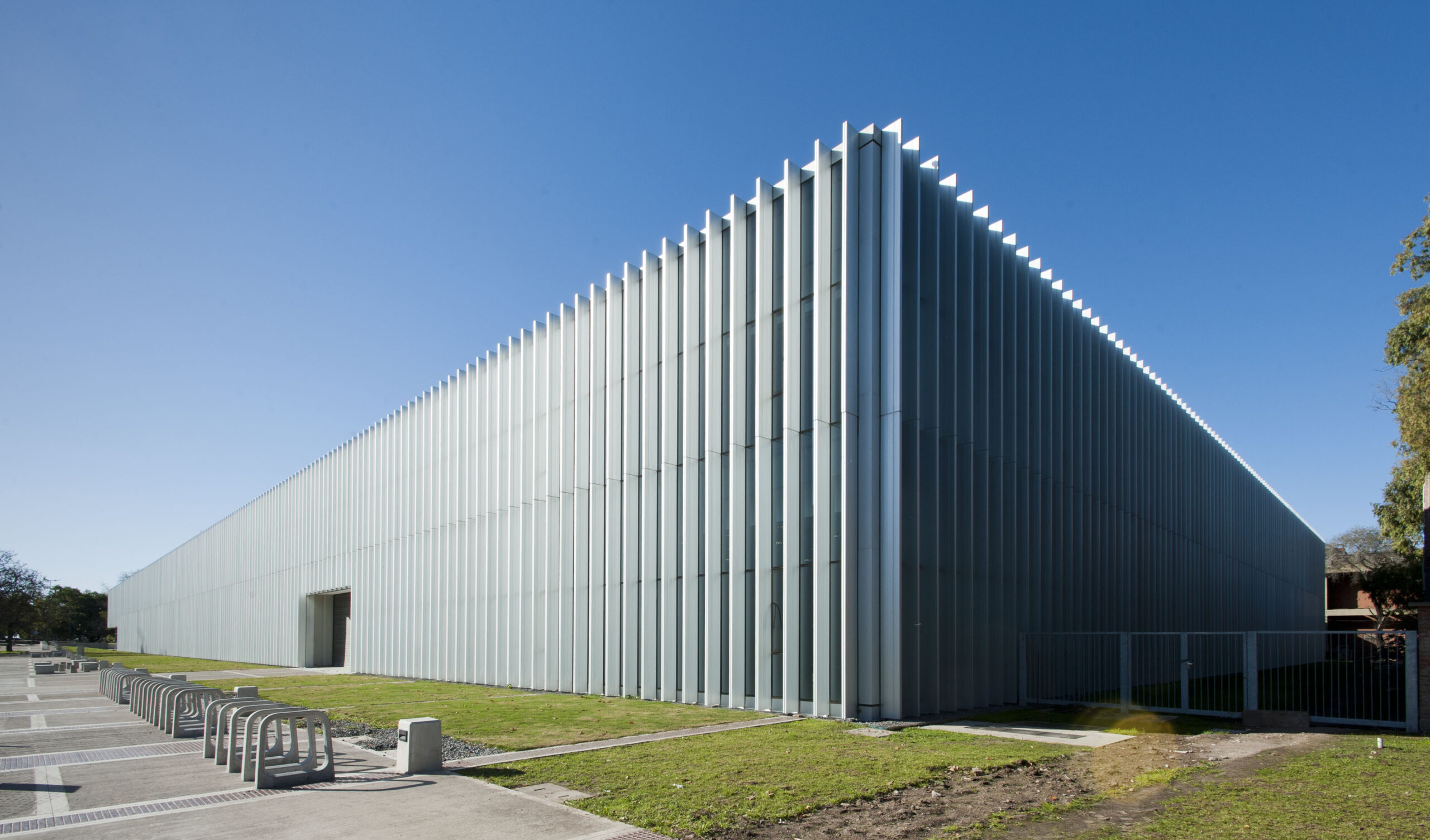
Throughout 2025, Fundar worked alongside the Faculty of Exact and Natural Sciences at the University of Buenos Aires to strengthen its links with the productive, public and social spheres. In coordination with the Exact Sciences Technology Liaison team, the project seeks to define a strategy and institutional design that more systematically connects the Faculty’s scientific capabilities with the needs of businesses, public agencies and civil society organisations.
The project stems from a structural problem in Argentina: the weak connection between the scientific-technological system and the productive apparatus. Over the last two decades, universities in more developed countries have given increasing priority to innovation, adapting their institutions, incentives and transfer mechanisms to maximise the social and economic impact of knowledge. To enhance the contribution of science to development, Argentina needs to follow a similar path.
The Faculty of Exact and Natural Sciences at the University of Buenos Aires (UBA) occupies a central place in the national scientific ecosystem. It trains approximately 25% of the country’s PhDs, accounts for 8% of CONICET researchers, and has world-class research groups in mathematics, physics, chemistry, biology, computing, and geology, among other disciplines. In addition, it produces more than 1,100 publications annually in peer-reviewed international journals, making it one of the main centres for scientific knowledge generation in Argentina.
In recent years, Exactas has deepened its ties with the productive sector and other external actors. This relationship is mainly channelled through technological services, which have experienced significant growth, and through the creation of science-based companies. At the same time, institutional support has been strengthened for research teams interested in transferring knowledge or developing solutions for companies, public bodies and civil society. This expansion poses the challenge of consolidating and scaling up these initiatives through a new institutional framework.
The work carried out within the framework of Puentes Exactos was organised into two main stages. First, a diagnosis was made based on a survey of quantitative and qualitative information. This included the construction of databases to analyse the main existing linkage mechanisms, the sectors involved and the institutes through which collaboration with external actors is coordinated. This analysis was complemented by interviews with researchers and those responsible for technological links, both within and outside the Faculty, which made it possible to systematise knowledge about how these links are generated, what the main obstacles are, and what demands exist to strengthen them.
In a second stage, the project focused on formulating recommendations for a new institutional design for engagement. To this end, a survey was conducted of strategies implemented by Argentine and foreign universities, with the aim of identifying trends and good practices. Based on this analysis, proposals were developed to strengthen three key functions: promoting entrepreneurial culture and training in technology transfer, supporting the trajectories of researchers and teams interested in technology transfer or entrepreneurship, and improving the mechanisms for connecting the Faculty’s internal capabilities with the demands of the productive, public and social environment. Finally, progress was made in identifying strategic verticals, defined according to the productive sectors and technological areas in which Exactas has the greatest potential for impact.
