
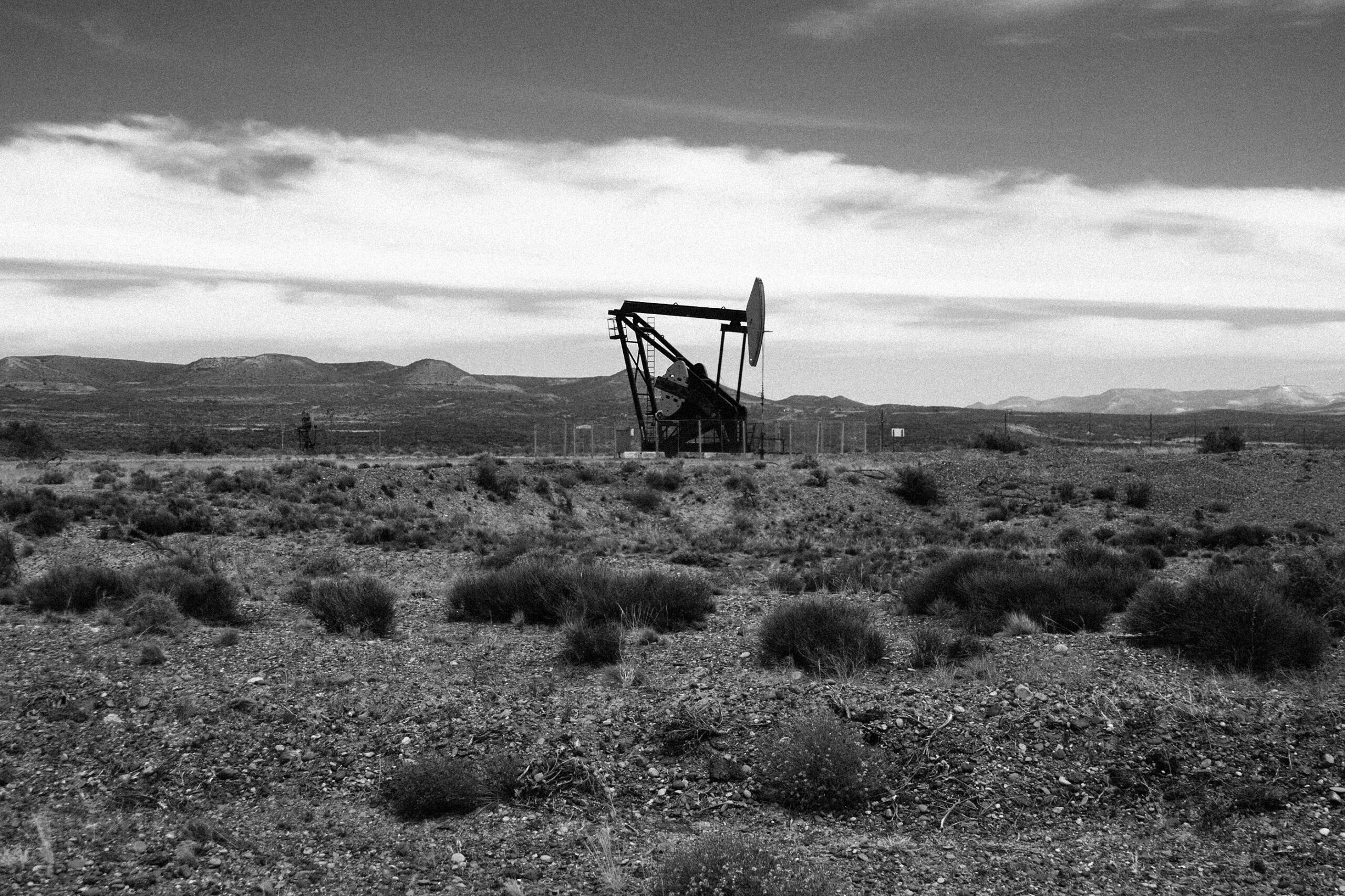
Argentina is undergoing a profound reconfiguration of its energy and production landscape. While Vaca Muerta attracts investment and attention, the San Jorge Gulf Basin is in decline: employment is falling, SMEs are closing, and provincial finances are being eroded. This crisis is not an isolated phenomenon. It is a new chapter in the classic boom-and-bust cycles of hydrocarbon-based economies, now intensified by the global energy transition. How can post-fossil fuel transitions be managed in an anticipatory, orderly and fair manner, before the social and territorial costs become irreversible?
In collaboration with:

Lessons for a restructuration
One need only review the history of other oil cities, both national and international, to recall the consequences of unplanned restructuring. We experienced this 30 years ago in Cutral Có and Plaza Huincul with the privatisation of YPF, and something similar is brewing in Comodoro Rivadavia. Comodoro was Argentina’s first oil city: almost 120 years of exploiting the resource generated jobs, investment and growth. In 2012, the city had 7 percentage points more registered employment than the national average, but today the reality is different. The San Jorge Gulf Basin faces the challenge of productive reconversion. After more than a century of boosting the economic and social life of Patagonia, its hydrocarbon production fell by 33% in gas and 20% in oil between 2017 and 2025. The impact is palpable in direct and indirect employment and in provincial royalties. This dynamic is associated with the rise of Vaca Muerta, whose cost competitiveness and operational efficiency have made it the main magnet for investment in the sector, displacing Argentina’s mature basins.
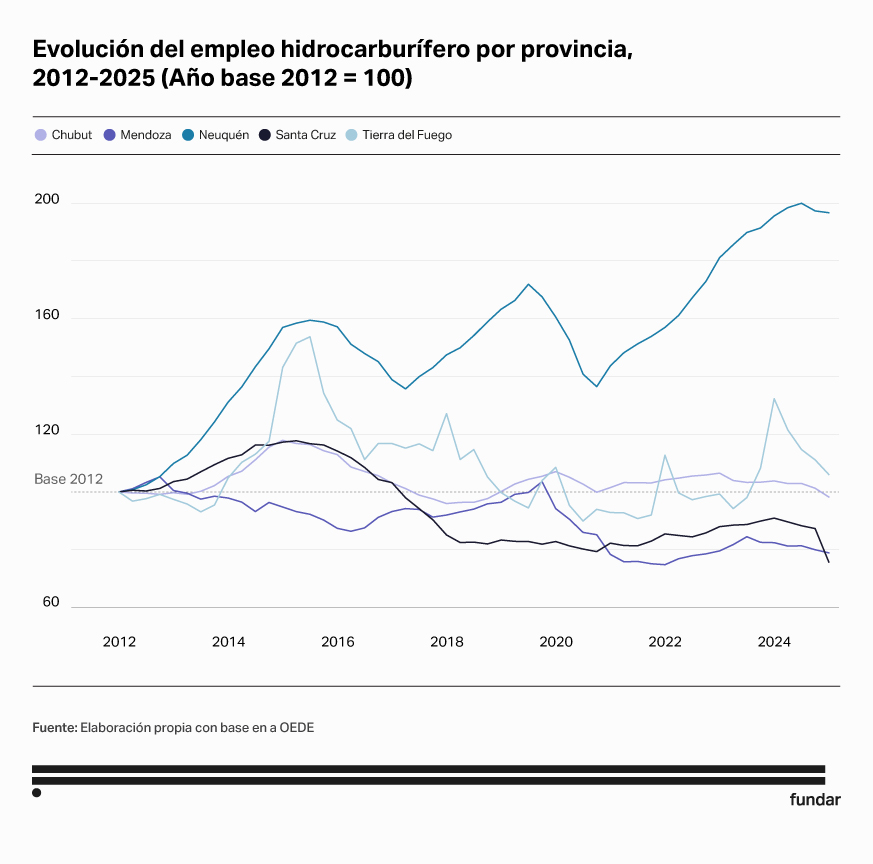
Vaca Muerta will continue to be one of the driving forces behind the Argentine economy, but we need to think about what comes next. If we do not start managing the future, if we do not plan for transitions before it reaches its peak, history will repeat itself.
Towards a just transition in Comodoro Rivadavia
The transition in Comodoro Rivadavia could become a public policy laboratory for Latin America: an example of how to manage the end of oil not as a loss, but as a starting point for a new, fairer, more resilient and sustainable territorial contract. The challenge is not simply to manage the end of a cycle: it is to redefine the regional development model based on new sources of value and social cohesion. This requires political leadership, institutional continuity and learning and monitoring mechanisms that allow policies to be adjusted over time. The experiences studied teach us that a fair socio-productive transition for the region requires early planning, identification of sectors with potential, coordination between governments, businesses, trade unions and communities, local institutional capacity and participatory governance mechanisms. The challenge is not simply to manage the end of a cycle, but to redefine the regional development model based on new sources of value and social cohesion.
The San Jorge Gulf Basin has opportunities for productive restructuring, based on the exploitation of fishing, mining and tourism resources, as well as the expansion of clean energy. However, economic and social recovery is a lengthy process, which can take decades even in cases considered successful.
